
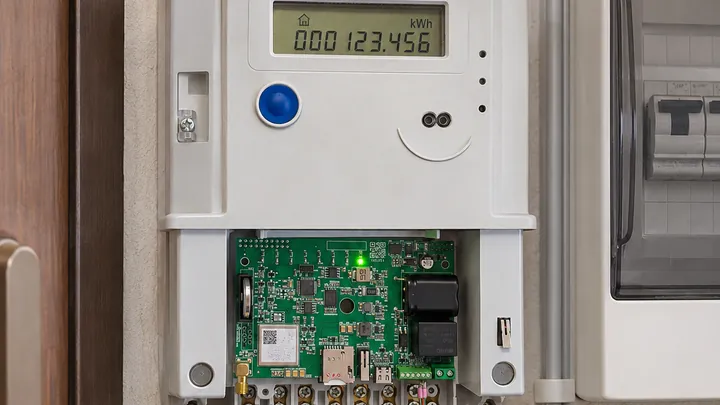
Commercial and industrial energy monitoring
Meter data from buildings and sites, kept during connection loss.
NOR Flash · store-and-forward
Energy & telemetry
VIOT connects RS-485 meter networks to your Head-End system over 4G LTE Cat 1 or 2G, and keeps collecting when the connection drops.
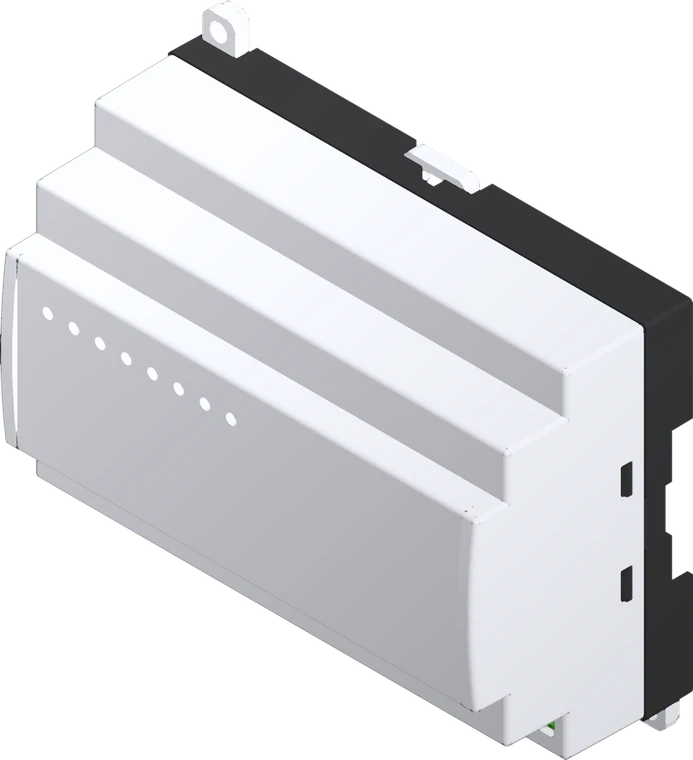
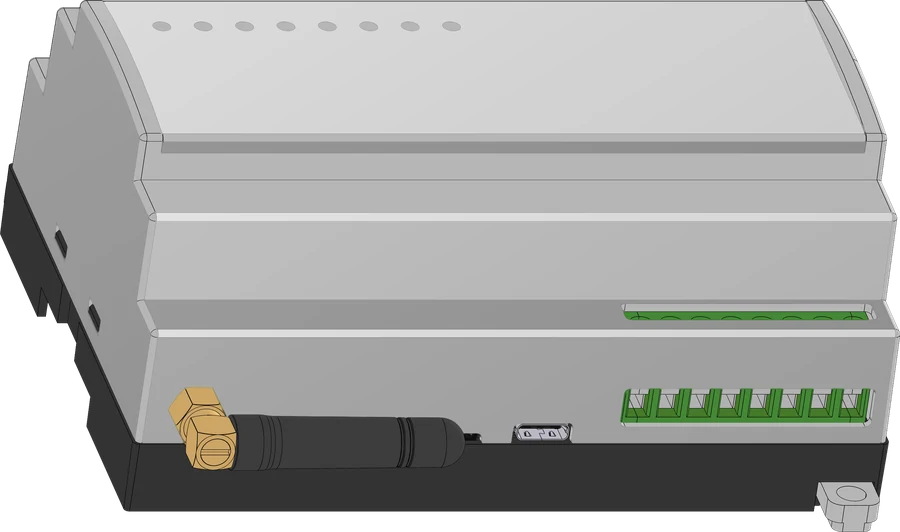
One gateway between the meters in the field and the system that reads them.
Falls back from 4G to 2G automatically, on a physical SIM or eSIM.
4G LTE Cat 1 / 2G GPRS-EDGE
Reads more than ten smart meters through one or two RS-485 interfaces.
10+ meters per gateway
Readout, profile requests and OBIS. DLMS/COSEM is a software library, integrated per meter.
IEC 62056-21 Mode C
Keeps collecting while offline and replays the records after reconnection, within the available memory.
128 MB NOR Flash
Secure transport, with AES-256 payload encryption and LZ compression selected per request.
MQTT over TLS 1.3, ECDHE
Scans the bus and finds the meters on it; newly added meters join the list on a rescan.
Discovery / rescan · up to 115,200 baud
One digital input, read as 1 when the contact is closed and 0 when it is open.
1 dry contact · all models
Latching relay with COM/NC contacts.
240 VAC / 5 A · U11B, U11C
Opening the cover creates a timestamped event and alarm record.
Event log and alarm
The internal RTC stamps records, logs and scheduled readouts with the correct time.
RTC ±0.5 s/day · EN 62054-21
When the supply drops, a rechargeable battery or supercapacitors power the device, depending on the model.
Battery (U11B) or 2 × 10 F supercapacitors
Local service from a mobile application over USB Type-C or RS-485; firmware updates over the cellular network, with a return to the previous version.
USB Type-C / RS-485 · FOTA / OTA
From the meter bus to your Head-End system.
Connect to VIOT over USB Type-C to configure it, read the meters, read and write its settings and set up the MQTT connection.
Set the APN, physical SIM or eSIM, RS-485 line and baud rate from one screen.
Instant readings, OBIS codes, profile requests and line scans, listed meter by meter.
Read the settings on the device, change them and write them back; every command is acknowledged.
Enter the broker address, port, client ID, topic and TLS 1.3 settings.
Edit CRON schedules, read logs and alarms, and update the firmware.
Screens are illustrative and show sample values.
Application areas named in the datasheet.
Meter data from buildings and sites, kept during connection loss.
NOR Flash · store-and-forward
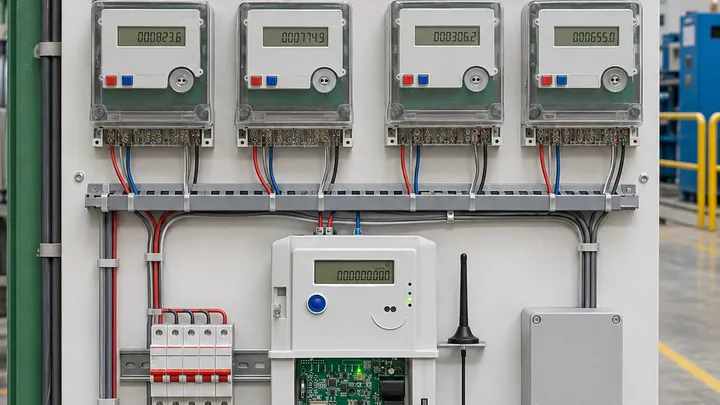
More than ten meters behind one gateway, on one or two RS-485 lines.
10+ meters · 1 or 2 RS-485
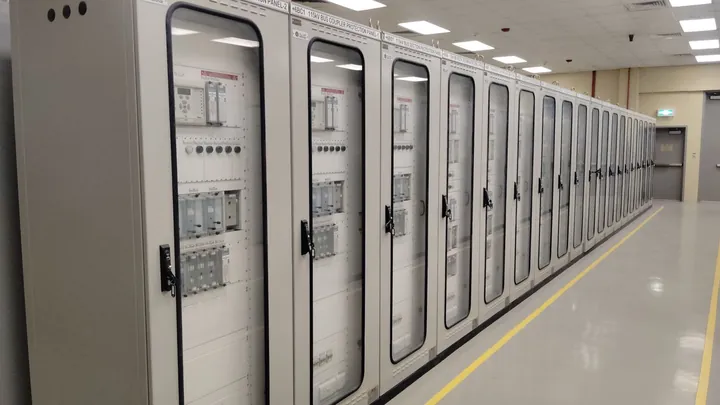
Advanced metering infrastructure with scheduled readouts from the field.
IEC 62056-21 Mode C · MQTT 5.0

Remote electricity metering over the cellular network.
4G LTE Cat 1 / 2G · eSIM
Four configurations, set by the RS-485 ports, the relay and the backup energy.
| Model | RS-485 | Relay | Backup energy | NOR Flash |
|---|---|---|---|---|
| VIOT-U11B-128 | 1 | 1 | Rechargeable battery | 128 MB |
| VIOT-U11C-128 | 1 | 1 | 2 × 10 F supercapacitors | 128 MB |
| VIOT-U20C-128 | 2 | – | 2 × 10 F supercapacitors | 128 MB |
| VIOT-U10C-128 | 1 | – | 2 × 10 F supercapacitors | 128 MB |
Assembled variants use 128 MB NOR Flash. 32 MB and 64 MB are available by order, with no PCB redesign. All models: 12 V DC input, one dry contact input, USB Type-C, physical SIM or eSIM, external SMA antenna. Relay: latching, COM/NC, 240 VAC / 5 A.
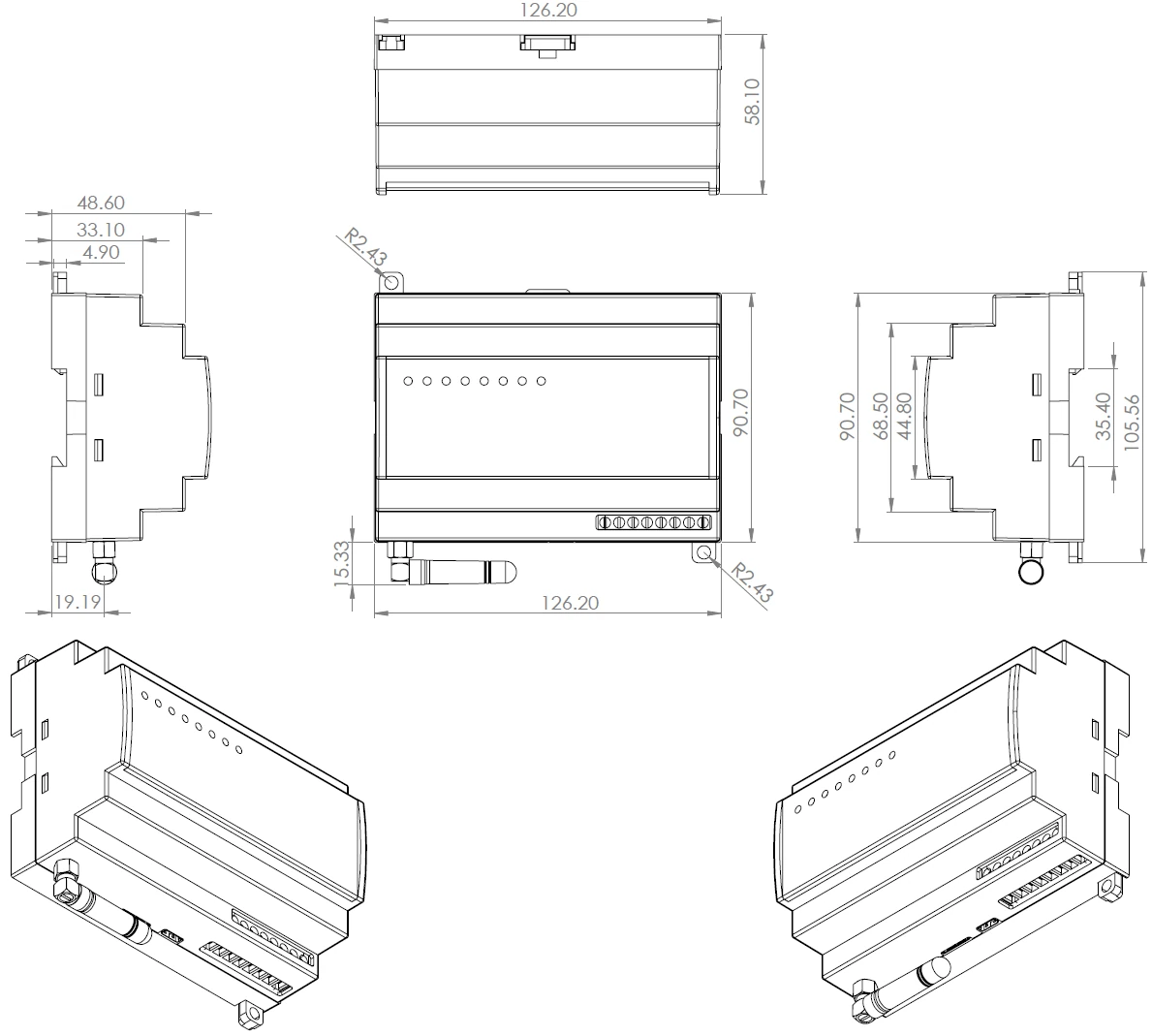
From the VIOT datasheet.
Data retention depends on record sizes, schedules, memory allocation and retry policies.
What the datasheet publishes, with the conditions.
Automatic 4G to 2G fallback and automatic switching between physical SIM and eSIM.
Scheduled collection continues offline and replays after reconnection, within available memory.
MQTT over TLS 1.3, with encryption and compression modes identified in each request header.
FOTA / OTA over cellular, with recovery to the previously working firmware version.
A rechargeable battery or 2 × 10 F supercapacitors, depending on the model.
EN 60068-2-1, -2, -30, -31; EN 62262; IEC 60529; EN IEC 62368-1; IEC 60695-11-10; EN 55032; EN 55035; EN 62054-21.
The listed standards identify the available testing and documentation scope; certificate numbers and laboratory identifiers are in the issued reports. CE and RED conformity declarations are not claimed in the datasheet.
Tell us your meters, their number and your Head-End system. We will help you choose a VIOT configuration.
We’ll review it carefully and get back to you with the best technical approach.
All information you share stays private and secure — NDA available upon request.
Prefer direct email?
[email protected]